
PLUS DIGITAL← Back to resources
Learn when a CRM becomes useful: scattered customer data, missed follow-ups, unclear pipelines, repetitive tasks, reporting needs and process integration.
A CRM becomes valuable when a company needs to organize prospect and customer relationships, record follow-ups and understand what is happening with every sales opportunity.
## Sign 1: information is scattered
When customer data lives across WhatsApp, email, spreadsheets and personal notes, history depends too heavily on individual team members. Centralization preserves context.
## Sign 2: follow-ups are being missed
A CRM can record next actions, owners, dates and reminders, helping the team maintain continuity.
## Sign 3: the sales pipeline is unclear
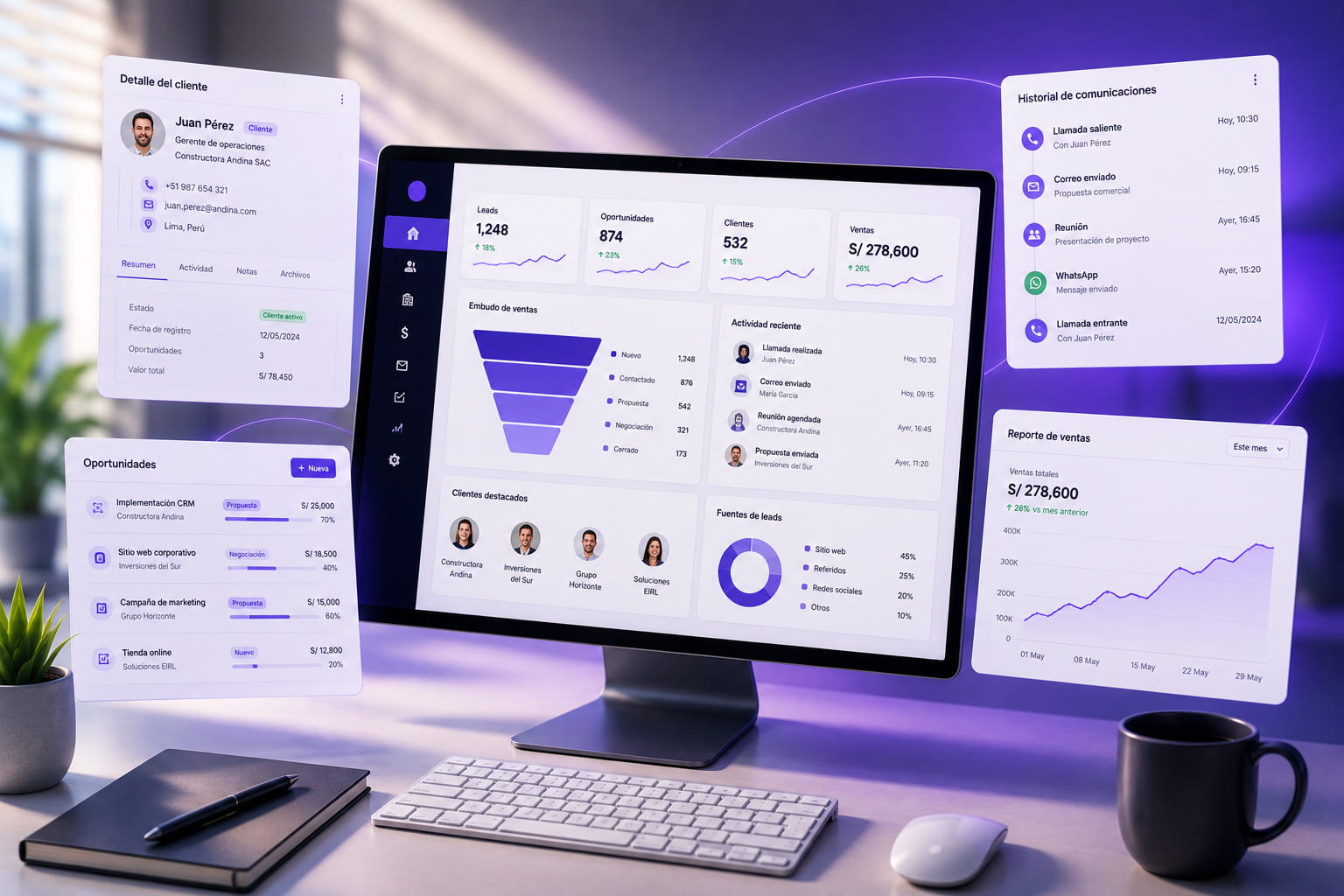
Stages such as new lead, qualified, proposal, negotiation, won and lost make it easier to understand how many opportunities exist and where they stop progressing.
## Sign 4: repetitive manual work is growing
Assignments, notifications, templates and certain stage-based actions can be automated when the rules are clear.
## Sign 5: results are difficult to measure
A CRM can reveal opportunities created, conversion rates, response times and loss reasons. Metrics should support improvement rather than exist only for supervision.
## Map the real process first
Document how a lead arrives, who handles it, what information is required, which stages it follows and when it is considered closed. The software should support the business process.
## Useful integrations
Website forms, email, authorized WhatsApp integrations, ecommerce, invoicing and internal systems can reduce duplicate data entry when implemented correctly.
## Start with what the team needs
Too many fields and rules can make adoption harder. Begin with a practical workflow, train users and add features as real needs appear.
### Conclusion
A CRM is worth considering when sales volume makes scattered tools difficult to manage. Its value comes from reflecting the real sales process and making daily follow-up easier.
Need help with a project?